How We Stay Free
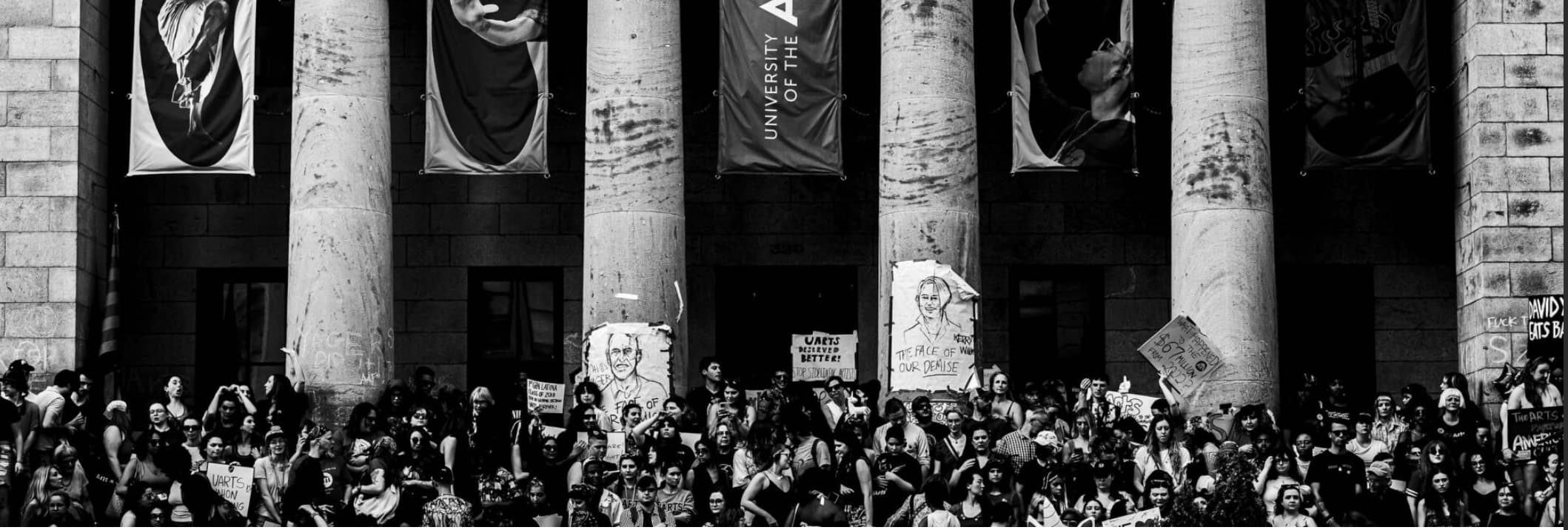
Mike Arrison is an activist and photographer born and raised in Philadelphia's Northeast neighborhood, where he continues to draw inspiration from the city's vibrant, multifaceted communities. Working primarily in photography, his style blends documentary precision with an activist's urgent gaze, capturing raw moments of urban life, personal resilience, and social struggle. His core themes revolve around identity, heritage, and the fight for equity, informed by his Irish and Puerto Rican roots and a family lineage steeped in Philadelphia's working-class history. Living with Tourette's Syndrome since early childhood, Arrison channels his lived experiences into images that confront stigma, celebrate neurodiversity, and highlight the intersections of race, culture, and ability in everyday existence. His medium serves as both a tool for advocacy and a lens for introspection, often employing candid street photography and portraiture to document the overlooked narratives of his hometown. What distinguishes Arrison's work is its unflinching visual language—gritty compositions, natural lighting, and a rhythmic framing that echoes the involuntary tics of his own condition, transforming perceived chaos into poetic harmony. Influenced by Philadelphia's rich activist traditions and the raw energy of Puerto Rican diaspora storytelling, his photographs eschew polished aesthetics for an authentic, handheld immediacy that pulls viewers into the fray. Without specific series dominating public discourse, his portfolio evokes the spirit of photographers like Teju Cole or LaToya Ruby Frazier, grounding personal vulnerability in broader cultural contexts of resistance and belonging. This fusion creates images that not only record but provoke, urging audiences to reconsider freedom not as abstraction but as the hard-won spaces between survival and self-expression. In the "How We Stay Free" exhibition at TILT Institute for the Contemporary Image, Philadelphia audiences will encounter Arrison's poignant interpretations of liberty through his lens, showcasing diverse resident perspectives on emancipation amid the city's complex social fabric. His contributions promise intimate glimpses of freedom's fragile textures—perhaps a bustling corner market alive with multicultural exchange or solitary figures asserting agency against institutional shadows—resonating deeply with local viewers familiar with Philly's layered histories of struggle and solidarity. Through this showcase, Arrison elevates photography as a communal act of defiance, inviting visitors to witness how ordinary Philadelphians, much like himself, navigate and redefine emancipation in the present tense.
All exhibitions →Harvey Finkle, a Philadelphia-born documentary photographer born in 1934, has devoted over five decades to capturing the raw essence of social, political, and cultural struggles through black-and-white still photography. A native of the city's Oxford Circle neighborhood, he transitioned to full-time photography in 1972 after serving in the Army, graduating from Temple University, and working as a welfare caseworker, experiences that profoundly shaped his empathetic lens. Based in Philadelphia, Finkle's style is intimate and unadorned, emphasizing patient observation and trust-building to document marginalized lives, from the Kensington Welfare Rights Union's tent cities and disability rights activists of ADAPT to immigrant communities, Deaf culture, and the remnants of South Philadelphia's Jewish population. His core themes—poverty, housing insecurity, labor rights, racial equity, and human resilience—permeate books like "Urban Nomads," "Still Home: Jews of South Philadelphia," and "Independent Living," as well as ongoing projects with progressive groups like ACT UP and death penalty abolitionists, revealing the unvarnished humanity amid systemic inequities. What distinguishes Finkle's work is its slow-burning visual language, where layered compositions demand prolonged gaze to uncover hidden narratives, such as a homeless figure beneath cardboard or a protester's quiet defiance, influenced by masters like Harry Callahan whose black-and-white precision he emulated amid the color-film era. Rooted in Philadelphia's diverse cultural crucible, his images eschew sensationalism for profound empathy, earned through personal immersion—he joined critique groups, gained access to tent cities via community blessings, and persisted even as macular degeneration dimmed his vision by age 84. Specific works like "Mariluz and Demitre Gonzalez, Kensington Welfare Rights Union Tent City II" or "Third World Playground" exemplify this, blending street protests, portraits, and daily rituals to evoke compassion and spur action, as seen in retrospectives at Woodmere Art Museum and Fleisher Art Memorial. In "How We Stay Free" at TILT Institute for the Contemporary Image, Finkle's contribution resonates deeply with Philadelphia audiences, offering a veteran perspective on freedom as defiant endurance amid oppression. His photographs, drawn from decades of witnessing activism, portray liberty not as abstract ideal but as collective resistance—poor families claiming space in tent cities, disabled advocates marching for rights, immigrants in rites of passage—inviting locals and visitors to confront their city's layered freedoms. Philly viewers will experience an unflinching mirror to ongoing struggles, where Finkle's lens bridges past protests to present interpretations, inspiring reflection on how communities stay free through solidarity and visibility.
All exhibitions →Joe Piette is a Philadelphia-based photographer whose practice is deeply rooted in the city's vibrant streetscapes and resilient communities. Working primarily from studios and urban locales across the Delaware Valley, he specializes in documentary-style photography that captures the raw pulse of everyday life. His style blends candid realism with subtle poetic framing, employing natural light and wide-angle lenses to immerse viewers in intimate moments of human endurance. Core themes in Piette's oeuvre revolve around freedom's fragile edges—exploring personal autonomy amid systemic constraints, the quiet rebellions of marginalized voices, and the unscripted joys that define liberation. Over the years, he has honed this vision through self-taught immersion in Philadelphia's diverse neighborhoods, from Kensington's gritty corners to South Philly's cultural enclaves, producing bodies of work that resonate with authenticity and empathy. What sets Piette's photography apart is its distinctive visual language: a masterful interplay of shadow and grit that transforms ordinary scenes into profound narratives of resistance. Influenced by luminaries like Gordon Parks and the street photography of Vivian Maier, yet distinctly shaped by Philadelphia's post-industrial cultural context, his images eschew polished aesthetics for textured immediacy—grainy exposures that evoke the tactile weight of lived experience. Works like his series on urban foraging and communal rituals highlight this approach, where subjects gaze directly at the lens, challenging viewers to confront the politics of visibility. Piette's cultural lens, informed by his own roots in working-class immigrant families, infuses his prints with a layered commentary on race, labor, and belonging, making his portfolio a vital chronicle of contemporary American freedom struggles. In the "How We Stay Free" exhibition at TILT Institute for the Contemporary Image, Philadelphia audiences will encounter Piette's contributions as a revelatory mirror to their own city. His selected photographs—intimate portraits of street vendors claiming public space, youth reimagining abandoned lots as playgrounds of possibility—offer a visceral interpretation of freedom as collective defiance and personal reclamation. Viewers will experience not just images, but an invitation to witness the unspoken strategies Philadelphians employ to "stay free," fostering dialogue on local histories of resistance and inspiring a renewed sense of shared agency in an era of uncertainty. Through Piette's lens, the exhibition becomes a communal affirmation, urging visitors to see their surroundings anew.
All exhibitions →Sunny Singh is a filmmaker and computer scientist who worked on AI systems in the defense sector before abandoning the industry in 2017. He pivoted to run his childhood project hate5six, a YouTube channel focused on producing and archiving live music recordings. To date, he has filmed over 7,300 performances. Singh deploys culture jamming to strategically leverage his channel’s massive algorithmic reach. Instead of offering entertainment and escapism, he subverts the platform to amplify marginalized voices and images from the front lines of various movements. Creating digital bridges between communities is reflected in his work and the installation he created for the exhibition titled Threads of Resistance. He regularly produces short films in solidarity with different indigenous liberation groups. His work has been featured in Rolling Stone and The New Yorker, and his project with Rage Against the Machine was recognized by The Rock and Roll Hall of Fame in 2023.
All exhibitions →How We Stay Free invites participants to capture their interpretation of freedom through photography. This exhibition will showcase the diverse perspectives of Philadelphia residents and visitors.