Salvador Jiménez-Flores, born in 1985 in Jalisco, Mexico, and now based in Chicago, is an interdisciplinary artist whose practice delves deeply into the politics of identity, migration, colonization, and futurism. Drawing from his bicultural immigrant experience, he crafts works that confront double consciousness and the 'otherness' imposed on marginalized communities, using media such as ceramics, drawing, prints, and mixed media sculpture. Holding an MFA in Drawing from Kendall College of Art & Design in 2014, Jiménez-Flores has garnered acclaim through prestigious awards including the 2021 United States Artist Fellowship, Joan Mitchell Foundation Painters & Sculptors Grant, and commissions from institutions like Artprize and Grounds For Sculpture itself. His pieces have appeared in major venues such as the National Museum of Mexican Art in Chicago, Grand Rapids Art Museum, and DePaul Art Museum, where they resonate as urgent calls for recognition and justice.
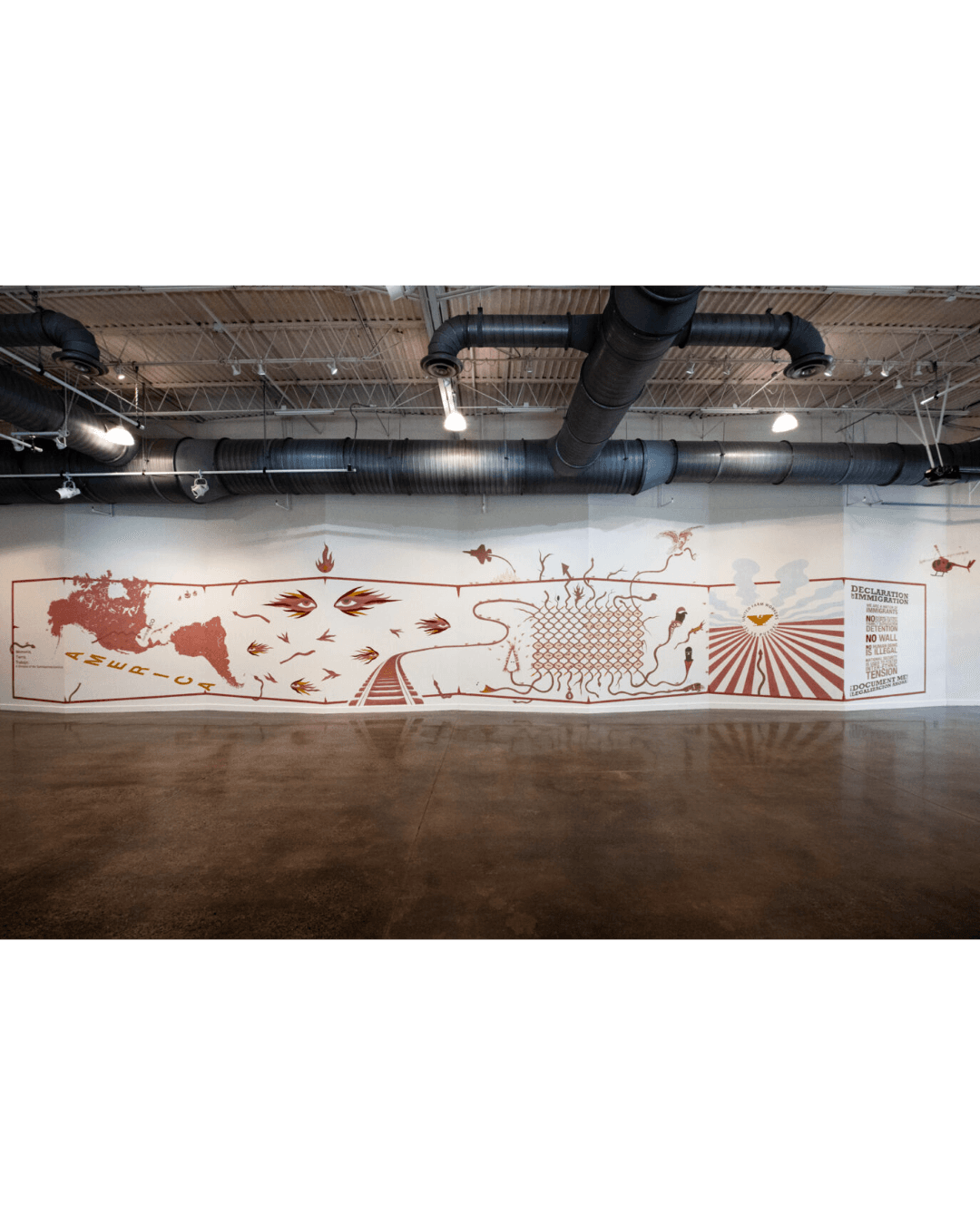
In Raíces & Resistencias at Grounds For Sculpture, Jiménez-Flores presents a powerful solo exhibition that embodies his signature fusion of personal narrative and collective history. The centerpiece is Memoria, Tierra, Trabajo: A Glimpse of the Semiquincentennial, an expansive 80- to 89-foot mural rendered in earthen pigments and clay slip on the East Gallery wall, offering a counter-narrative to the U.S. semiquincentennial by tracing timelines of colonization, labor exploitation, and migration across the Americas. Layered with Mexican iconography, bilingual texts, and references to the United Farm Workers—echoing his father's involvement in the Bracero Program—the mural transforms into a living document of memory, exclusion, violence, and the pursuit of equity. Opposite it, the installation Gritos Grabados en la Penca del Nopal centers a ceramic self-portrait as a cactus paddle encircled by protest flames and inscribed declarations from immigration rallies, channeling raw emotional cries for dignity and freedom.
Extending outdoors into the park's hedge garden and Main Loop, two bronze sculptures—hybridizations of human forms with nopal cacti and Mesoamerican symbols—stand as testaments to resilience. Caminantes depicts feet morphing into cacti, symbolizing the enduring journey of migrants, while The Resistance of the Hybrid Cacti: The Desert’s Whisper features the artist's forward-gazing self-portrait atop Olmec-inspired busts and etched prayers like 'I am my ancestors’ wildest dream.' These works, bold in gesture, vibrant in color, and rooted in natural symbolism, envision hybrid identities not as threats but as thriving forces, adapting and resisting amid adversity. Through this exhibition, running through August 2027, Jiménez-Flores not only honors his lineage but proposes a hopeful futurism where cultural endurance blooms defiantly.
All exhibitions →